Vendors and risks live on the same record as the controls that deal with them.
Ask your AI and it drafts the vendor list and the risk register from what it can read about your company.
We tie each risk to the vendor or system it comes from, so when a vendor changes, you can see straight away which risks are affected.
Harbor Ledger’s card processor sits on its record next to the risk it brings.
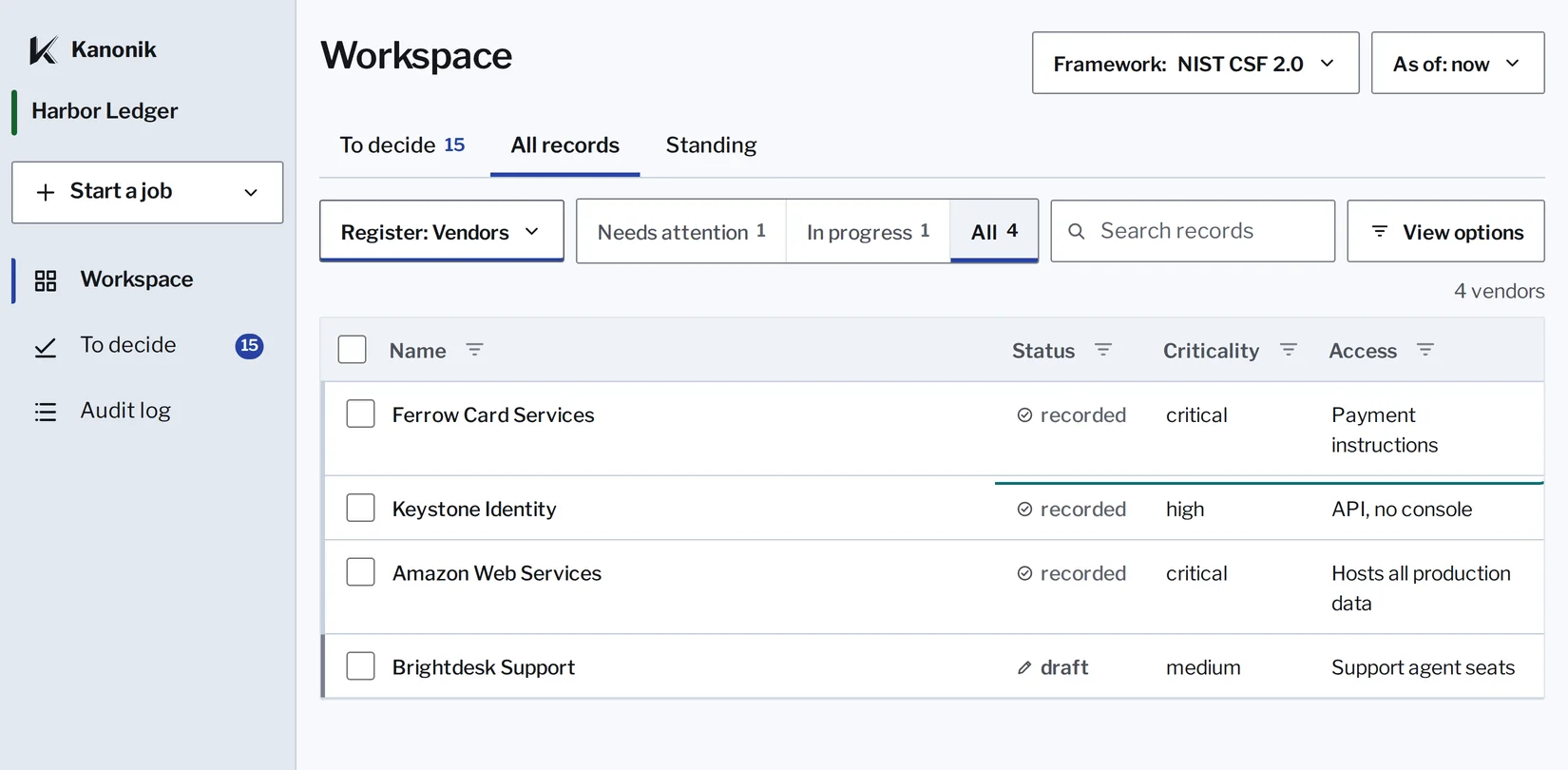
In the Harbor Ledger sample, Ferrow Card Services processes the card payments.
- Kanonik
Ferrow is on the vendor list.
Its entry says how critical it is and what data Harbor Ledger shares with it. The safety check made sure the two agree.
- Dana’s AI
The risk is written about this vendor.
It’s titled “Card processor outage stops outgoing payments.” It names the threat and what it would do to Harbor Ledger’s business, with a likelihood and a severity, and it points back to Ferrow.
- Mei
Mei owns the risk, so she decides how to handle it.
The usual answer is a control that treats it, though she can also plan a fix or accept the risk as it stands.
- Mei and Dana
Mei accepted the risk, and Dana confirmed it.
Accepting a risk is a separate decision, and it needs its own approval. Kanonik checks that the person accepting it owns the risk. It also checks that the risk left over isn’t rated worse than it was before treatment. Then a second person confirms it.
- An engineer
Engineering wants a new backup provider.
Foresight checks that change against the promises your team has made to customers.
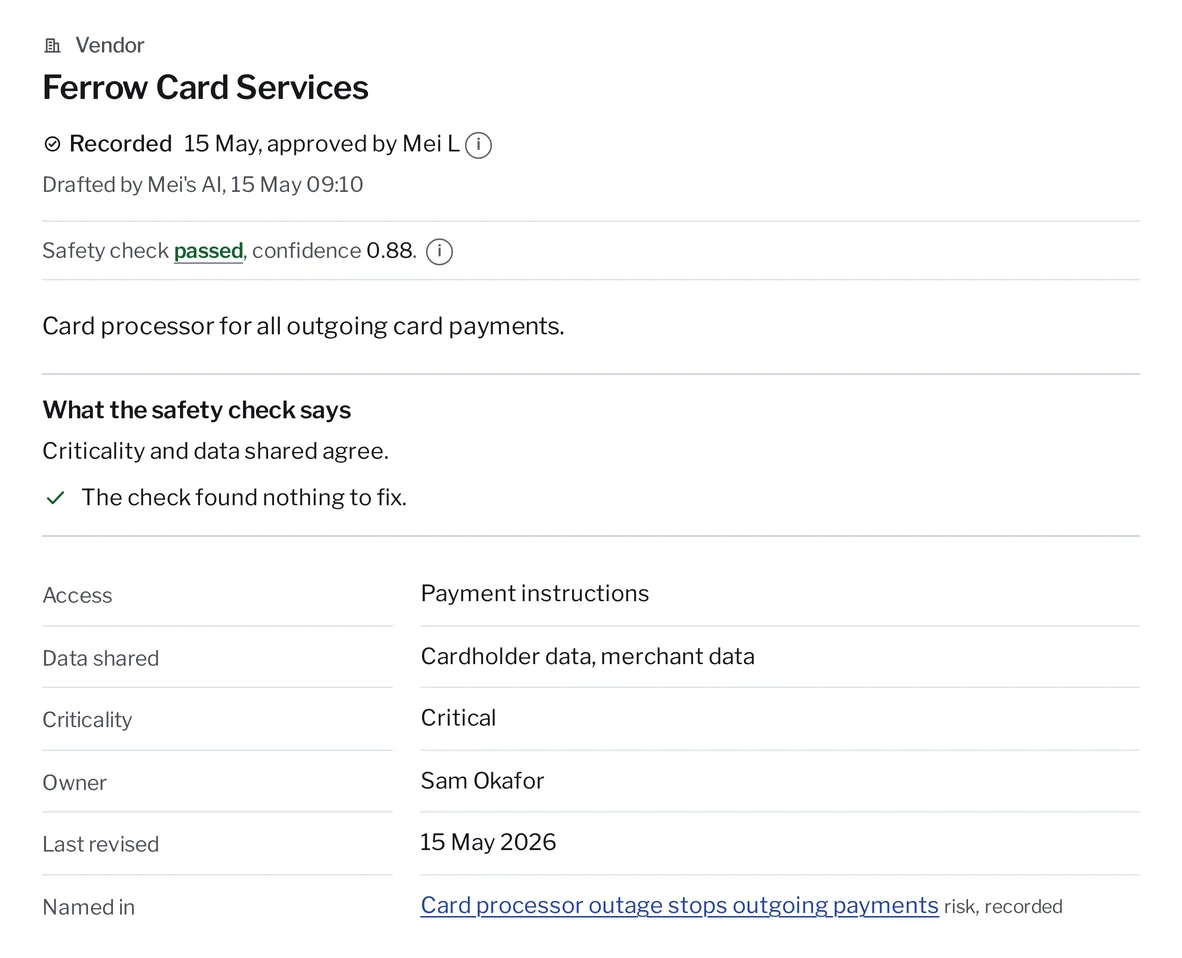
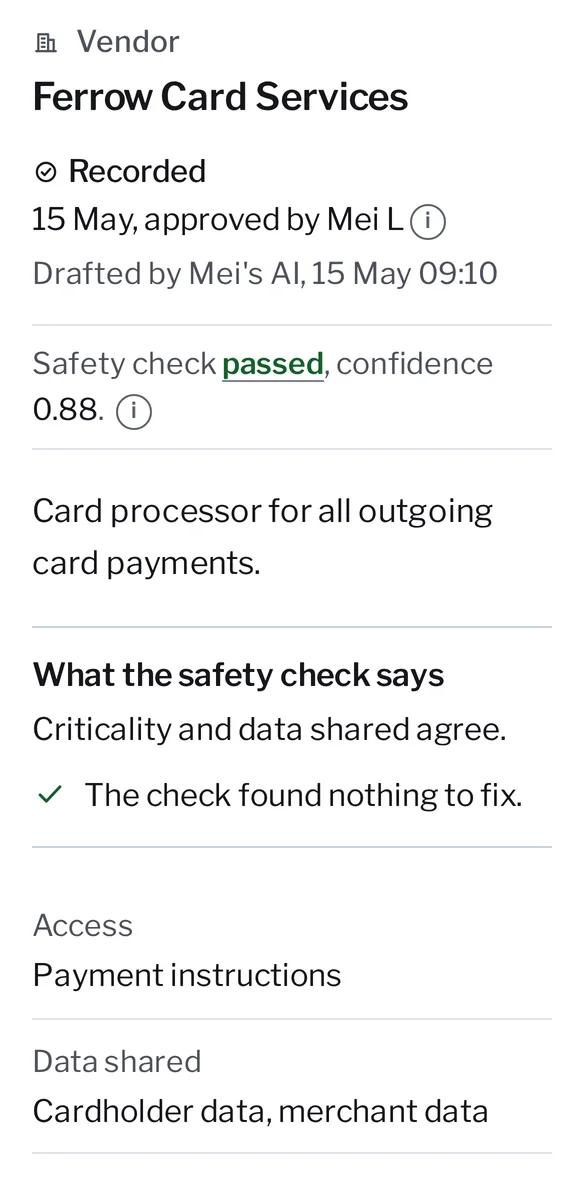
The vendor points to the risk it creates.
A vendor in Kanonik, with sample data from Harbor Ledger.